
Saint John's Water
Italian Midsummer Folk Magic

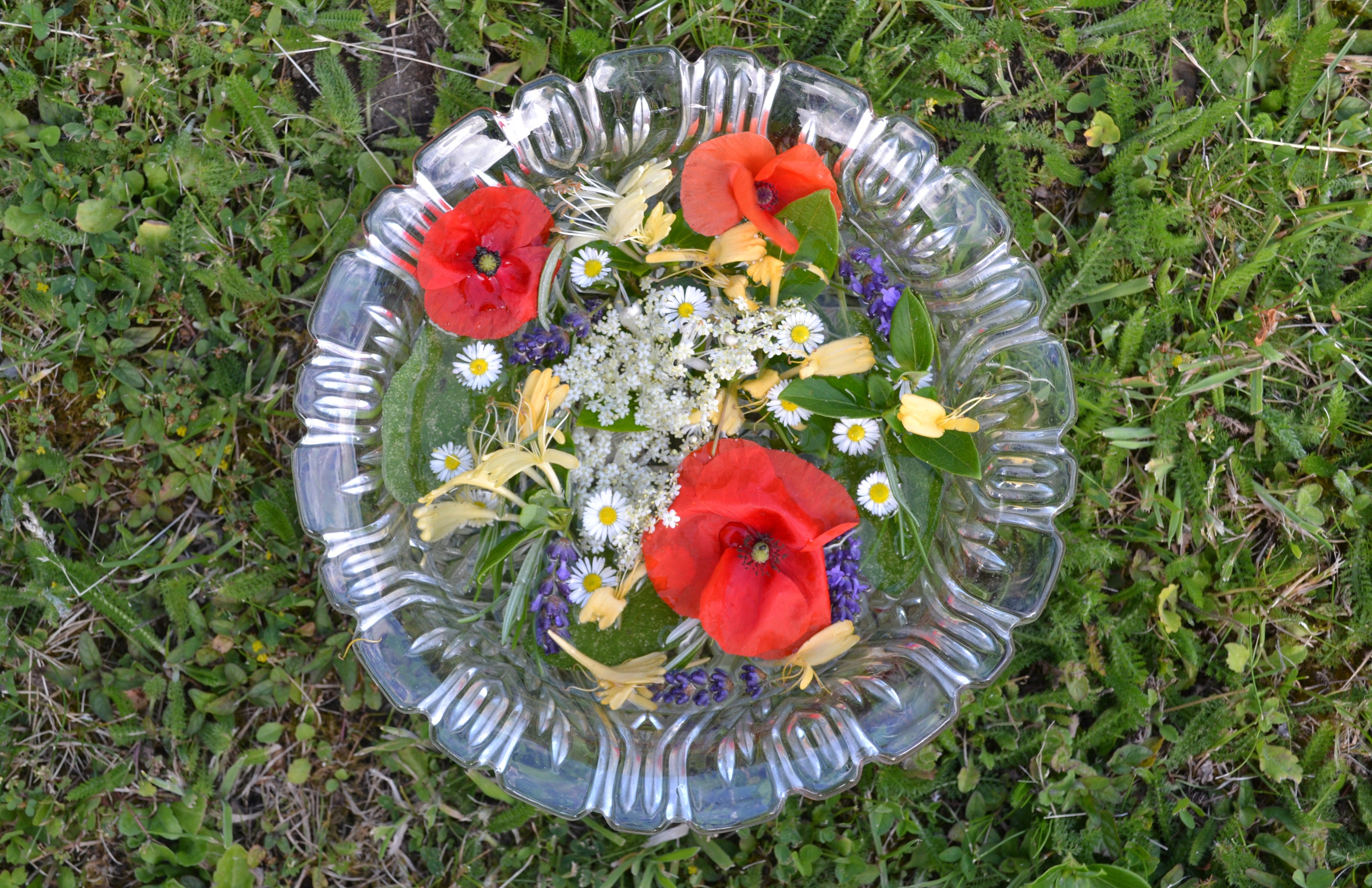
The air is filled with mystery and charm on the eve of St John the Baptist. As the light begins to fade and ancient beliefs are revived once more, Italian women make their way to woodlands, fields and gardens in search of flowers and herbs to create the magical l’Acqua di San Giovanni (St John’s Water). According to Italian folklore, this magical elixir garners healing and protective properties once it is blessed by St John the Baptist himself on the eve of the 24th of June.
When the lives of our European ancestors depended on the success of the harvest, St John’s Water was one ‘tool’ they used to counteract threats to their crops such as pests, drought and thunder storms. The water was also sprinkled on their livestock or animal feed for protection and health. The tradition of gathering medicinal herbs and flowers at Midsummer is still being practiced across Europe today for protection, luck and good health.
The key ingredient that magnifies the water’s potency is Midsummer dew. This magical addition symbolises the purification and renewal associated with St John’s baptism of Jesus. Before any Christian symbolism had hidden what had come before, dew represented the divine feminine, the moon and fertility especially when the sun reached its maximum strength and vigour at this time of year. In the Christian tradition, the dew represents the tears of those who mourn the death of St John or the tears of Salome, the woman who asks for the head of John the Baptist at her mother’s request. On this night, old tales talk of the fiery sun marrying the watery moon and the herbs and flowers that are gathered during this time absorb all of the power from this union of light and water.
Traditionally, fragrant herbs and flowers are only to be gathered by a woman’s hands on St John’s Eve; preferably at dusk on an empty stomach. An odd number of plants are collected, most commonly seven or nine different species and prayers are recited while doing so. Once home the plants are processed and placed in an earthenware or glass bowl after which spring water is poured over them. Only leaves, petals and the flower heads are used. It is customary to make extra to give away to family and friends. The bowl is left outside and exposed to the night air so that the water can imbue the medicinal properties of the plants as well as the magic of the dew. St John the Baptist is expected to pass by in the night to add his final blessing.
In the morning the women wash their face and hands in the sacred elixir while reciting another prayer for good luck, good health, love and fertility. After this ritual, the blessed water is used to wash down windows and doors, to purify the home and to drive away any negative energies. Depending on what herbs are used, St John’s Water is also said to promote hair growth and heal skin conditions.
The Catholic Church struggled to eradicate the old folk practice of gathering apotropaic plants at Midsummer and to syncretise this tradition any plant that was flowering at this time of year was associated with St John. The most popular of these flowers are yellow and sun shaped such as marigolds and St John’s Wort.
In Italy, La Festa di San Giovanni Battista is still celebrated in some regions with torch lit processions and community gatherings which are accompanied by music and dancing. Bonfires are lit at crossroads especially in front of churches where the celebrations are mainly focused. Loud sounds reverberating from drums and trumpets scare away the witches who are active this night.
Ancient gods of Rome were honoured at Midsummer such as the Tempestates, goddesses of weather and sudden storms. Black sheep were sacrificed in their temples. Summanus, the god of lightning who was closely related to Jupiter was honoured also at this time. He was the god who weilded thunderbolts by night where as Jupiter weilded them by day. Wethers were sacrificed to him and cakes shaped like wheels were offered up.
The Nine Herbs of St John
The Nine Herbs of St John refers to the nine herbs and flowers that one gathers at Midsummer. These are crafted into a garlands and wreaths that are hung up on doors or rafters. The herbs and flowers usually consist of St John’s Wort at the centre of the wreath surrounded by a selection of the following to make up the nine herbs: sunflower, marigold, spikenard, mullein, mugwort, plantain, yarrow, ivy, vervain and orpine. One could also use lavender, rosemary, poppy, rose, sage, rue, mint, chamomile, elder flower, scabious or thyme. What herbs and flowers you gather all depends on what is naturally growing in your area and what symbolism you want to have represented in your wreath or garland.
Across Europe, all plants gathered at Midsummer were thought to be particularly potent for healing. Thyme that was picked on St John’s Eve was kept until Christmas Eve in Germany then burned under trees to encourage fertility; while other herbs were given to cattle with their winter feed to keep them healthy. The magical properties of these plants were thought to transfer over to cattle, people and trees.
Rowan trees were ritually felled and prepared for healing purposes. Walnut leaves, for skin and digestive conditions had to be picked today as did sycamore leaves for curing headaches and healing wounds. Walnut wood and leaves gathered at Midsummer offered year long protection against lightning strikes because it had been observed that the walnut is the tree least hit by lightning.
St John’s Wort
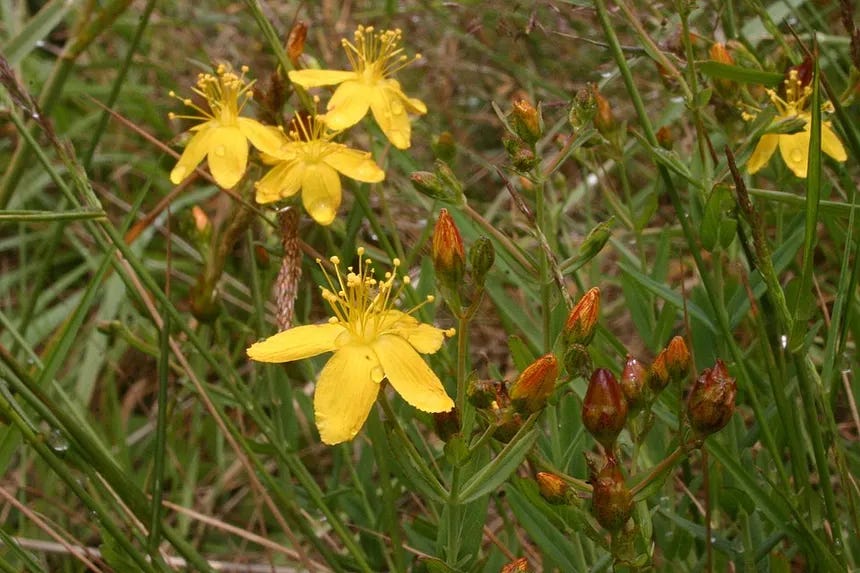
Historically, St John’s Wort protects against fire and lightning if hung up in a window on this day. Daisies picked between noon and 1pm are said to protect against plague, and travellers carried them for good luck.
It is said that St John’s Wort is only effective if it is found by accident. The flowers are sewn into clothes, worn around the neck or placed above picture frames to ward off malevolent spirits. Placed in windows and over doors it also wards against the evil eye and lightning. Its reddish sap is known as the blood of St John and the red spots are said to appear on the leaves on the day of his martyrdom. One of the most important herbs in European medicine, St John’s Wort was given to children to wear this night to avert sickness.
St John’s Wort was one of the seven Irish herbs that the poet and folklorist Lady Jane Wilde said could protect against all things natural or supernatural. The other six were vervain, speedwell, eyebright, mallow, yarrow and self heal. In the Balkans, St John’s Wort was associated with the Virgin Mary and the Irish St Colmcille wore it under his armpit for protection.
Traditionally, the best time to gather this herb is between St John’s Eve and Old St John’s Eve. To have all of the herbs of St John meant you were ready for any eventuality even death. Possessing this plant brings peace and plenty to the home and brings prosperity to one’s livestock and fields. In England, it was believed that the Devil could not approach within nine paces of you.
Rituals For Today
In an increasingly chaotic world, dedicating a little time to connect with the natural world in ritual allows us to become one with the turning seasons. Our inner rhythm synchronises and a seed of ancestral magic gets planted into the everyday. Preparing a bowl of St. John’s Water is a way to take time for yourself as you cultivate your garden of gratitude. Midsummer is a time to pause and reflect on the past six months before looking ahead with clarity and intention. Let us embrace rebirth and renewal in the cooling waters of St John.
Please remember to always research the safety of the herbs and flowers that you gather. St John’s Water should never be ingested.
Wishing you a magical Midsummer. I have linked my previous Midsummer articles below for you to read as well as the Midsummer issue of the folk zine.
Do you think you might be making your own St John’s Water this summer? Tag me if you do.
Brightest blessings,
Elissa
Bibliography & Resources
The Magical Properties of Plants by Tylluan Penry (2018)
Della Medicina by Lisa Fazio (2024)
The World of Italian Folk Magic by Rosa Inserra (2024)
The Moon Myth And Image by Jules Cashford (2003)
The Illustrated Plant Lore by Josephine Addison (1985)
The Magical Lore of Herbs by Marion Davies (1994)
The Lore of Flowers by Neil Ewart (1982)
Ireland’s Wild Plants by Niall Mac Coitir (2006)
Ireland’s Trees by Niall Mac Coitir (2003)
A Calendar of German Customs by Richard Thonger (1966)
Midsummer's Eve
·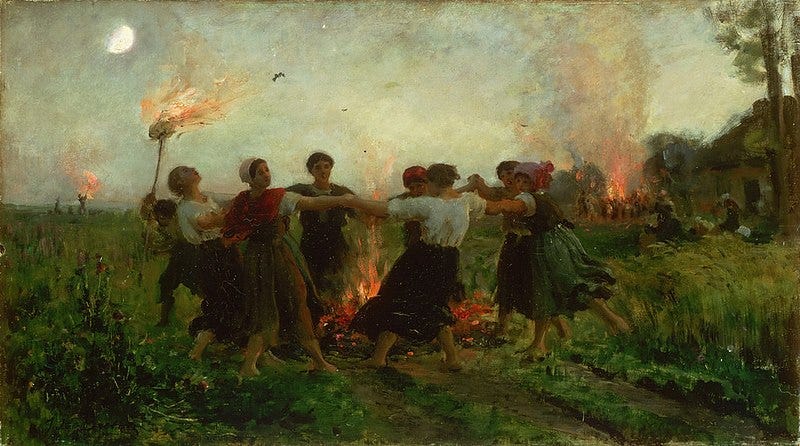
In the farming calendar, June is one of the busiest months of the year with long days consisting of haymaking and sheep-shearing. All the farms helped one another including the women who made sure that everyone was well fed. Agricultural workers would travel the countryside looking for sheep-shearing work. The men toiled from four o’clock in the morning…


Love and light to you. What an interesting article, these practices are new to me! Although a Druid told a large group how wonderful it was to roll naked in the Dew of Midsummer morning! Thank you
Midsummer blessings to you 🌞 lovely article too 🌸🌻🌼💠 i think a little st.johns water will be on the cards 🙌😊 i feel very blessed to work in folks gardens and being immersed in the healing power of nature 😊 that in itself feels like a daily healing ritual all year round ✨ xx